
Flying a drone on or near the railway could be dangerous - if a train collided with a drone, it could cause a serious accident or a drone could fly into and damage vital equipment - such as overhead wires or pylons - costing thousands to repair and causing hours of train delays. A drone falling from the sky - malfunctioning or out of power - could hit a member of public or Network Rail staff and cause serious injury or death.
Network Rail manages nearly 1000 drone flights over the railways per year and, therefore, would like to know what other flights there are near to this extremely hazardous environment. For that reason, Network Rail request that if you are flying within 50m of the railway line and follow the recommendations below when planning your flights.
When you plan a flight in Dronecloud that intersects, or is close to the railway line, Dronecloud will allow you to automatically notify Network Rail of your operation.
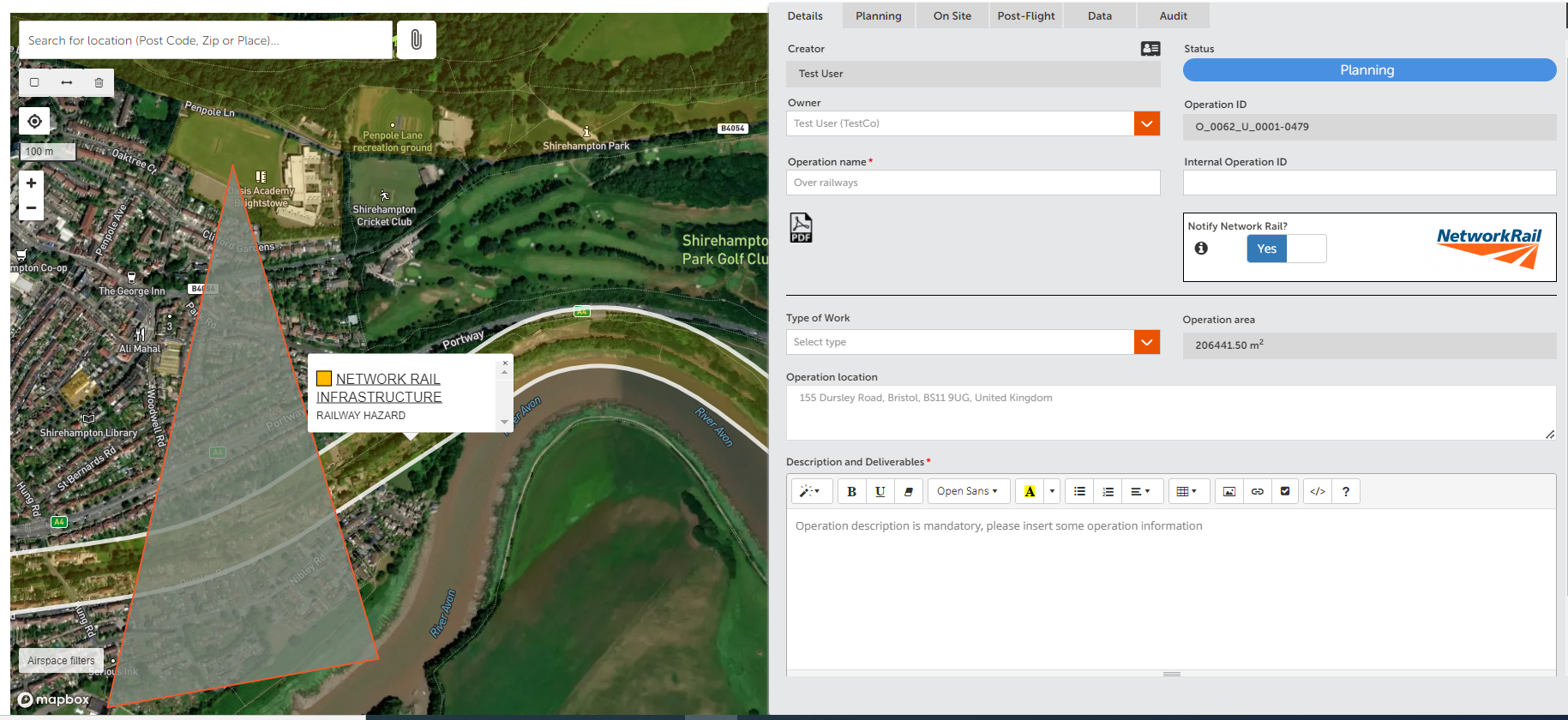
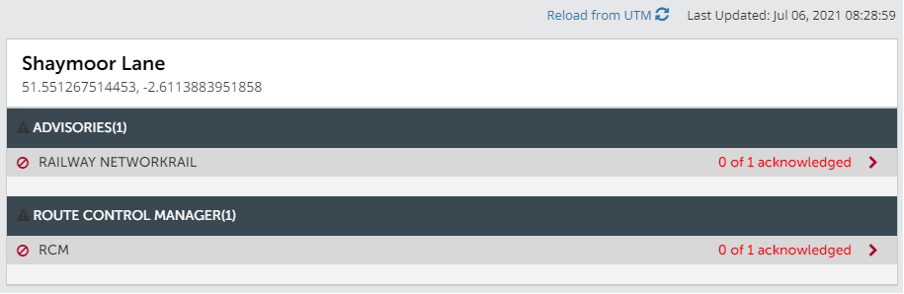
On submission of your flight plan, Network Rail will be notified and the local Route Control Manager (RCM) will also be informed. You can see the details of the RCM in the advisories panel, should you need to contact them directly.
When you submit your flight, you will receive an email to acknowledge that Network Rail have been made aware and have registered your flight. This email will also include important information regarding emergency procedures should an incident occur on the track.
If you make changes to your flight after notification, Network Rail will be updated with the new details.
If in doubt, please contact Network Rail's Air Operations Team by email: droneenquiries@networkrail.co.uk
Network Rail's Recommendations
Non-qualified remote pilots (hobbyists)
Flying near, on or over the railway is infrastructure is extremely dangerous and could result in significant loss and/or damage to the railways or affect passenger journeys.
Your aircraft could cause significant issues, including:
- Endangering people working on the railway;
- Disrupting urgent track inspections that are being carried out by authorised employees or contractors;
- Disrupt a search for a missing or vulnerable person by the British Transport Police; or
- Cause damage to railway property and equipment.
You should:
- Avoid flying your drone near, on or over the railway infrastructure
- Note that you could be personally liable for any damage caused by you or your drone if you do not have insurance of at least £5,000,000
- Be aware that you could be prosecuted under Article 241 of the Air Navigation Order 2016, which states:‘A person must not recklessly or negligently cause or permit an aircraft to endanger any person or property’
Qualified remote pilots (professionals)
You should comply with Network Rail’s standard NR/L3/OPS/251 Unmanned Aircraft System (Drone/UAS) Operations, available at Network Rail (ihs.com). Network Rail’s Air Operations team shall monitor compliance with this standard and undertake ad hoc audits of flight registered in Dronecloud.
You are wholly responsible for your flight and prior to operating a UAS/drone near, on or over Network Rail infrastructure, you should:
a) Notify Air Operations of the planned flight via Dronecloud;
b) Conduct a risk assessment / method statement / safe system of work. This includes but is not limited to:
- Boundary ownership;
- Track worker distraction;
- Moving trains / line speeds;
- Electrification and lineside hazards (overhead line equipment, conductor rails) and electrical overhead powerlines.
- Localised Radio Frequency from GSM-R and Signal systems.
c) Document a robust and agreed system of alerting the relevant Network Rail Route Control Manager (RCM) of an incident involving the UAS/drone if it causes a safety concern to the running of the railway;
d) Have Public Liability Insurance in force with a minimum value of £5,000,000 for drone operations on or near the railway;
e) Operate under a current [CAA] Permission supported by an approved Operations Manual; and
f) Comply with the Network Rail’s Life Saving Rules.
Comments
0 comments
Article is closed for comments.